Wednesday, 10 April 2019

P&P: Getting started - Social Classes and Titles

Class difference was of course a fact of life for Austen, and an acute observation of the fine distinctions between one social level and another was a necessary part of her business as a writer of realistic fiction (Copeland, 1997: 115).
Although in her own life Austen did have some dealings with royalty, however mediated, when she was graciously invited to dedicate Emma to the Prince Regent, she never presents royalty in her fiction, nor any of the great aristocrats who still owned great tracts of the country, and were prominent in its government.(Copeland, 1997: 116).

Royalty (Your Majesty/ Your Highness)

  • King
  • Queen 
  • Prince
  • Princess


Nobility (Lord/Lady)

  • Duke
  • Duchess
  • Marquis
  • Marquise
  • Earl
  • Countess
  • Viscount
  • Viscountess
  • Baron
  • Baroness

Commoners (Sir/Lady, Mr/Mrs)

  • Knight
  • Landed gentry
  • "Pseudo" gentry 


To distinguish a nobel lady from a non-noble lady, the first name of the noble women was used.
Eg: Lady Catherine de Bourgh is a noblewoman whereas Lady Lucas is the wife of a commoner.

Other Gentlemen (Mister or rank title such as Captain, Colonel)

  • Affluent businessmen
  • Navy and army officers (Follow this link to know more about hierarchy within this group)
  • Clergymen


References:

Copeland, E.; McManter, J. (1997) The Cambridge Companion to Jane Austen. Cambridge: CUP.

Warren, R. (2008). Rank and Class of the Regency Period. [Online] Retrieved from:
https://www.janeausten.org/rank-and-class.asp (Accessed, April 5th, 2019)

(2011) Titles and Precedence. An Explanation of English Titles. [Online] Retrieved from:https://www.janeausten.co.uk/titles-and-precedence/ (Accessed, April 5th, 2019)

Friday, 5 April 2019

Marxist Criticism

According to Marx, people’s lives are determined by their economic circumstances. Material circumstances and historical situations, among other aspects, form a society. He believed that the owners of the means of production can manipulate politics, government, education, arts and all other aspects of a culture.

A key figure is the first major Marxist critic Georg Lukács who developed the critical theory of ‘reflection’, seeing literary works as reflections of a kind of system that was gradually unfolding.
In his view, the novel, for instance (and he had much to say about this genre), revealed or ought to reveal underlying patterns in the social order and provide a sense of the wholeness of existence with all its inherent contradictions, tensions and conflicts.

Some of the most common questions that a reader should keep in mind when reading a text from a Marxist perspective are the following
  • Are both the classes depicted with equal care and attention? Is the working class ignored or devalued in any way?
  • Is there any exploitation or manipulation of workers by their owners?
  • Does the dominant class in the text, consciously or unconsciously, repress and manipulate the working class?
  • What does the setting tell you about the distribution of wealth and power in the society?
  • Is the text a product of the culture from which it has originated?
  • Does it support or condemn capitalism?
  • What were the economic conditions during the publication of a text and how was it received in the society at that time?
Jane Austen lived in a society which was ruled by strict codes of conduct and where class and social standing held immense importance. Austen belonged to the class that the historian David Spring calls “pseudo-gentry”as her father was a clergyman. Pseudo-gentry were the upper-professional families living in the country who had connections with the wealthier landed-gentry families oin the area. Their economic situation, however, was below the families of the landed-gentry.

Austen’s novels revolve around the life and events of the upper classes of the society. She wrote about the people and the class that she was familiar with and readers wanted to read abour. The characters of her novels belong to the classes that she was in close contact with i.e. the clergy, minor landed-gentry and upper landed-gentry.

Cuddon, J. (2013) A Dictionary of Literary Terms and Literary Theory. Fifth Edition. Oxford: Wiley-Blackwell

Fanfic, participatory culture and Transmedia Storytelling

Fanfic is writing by fans who either want more of their favorite works; or who want more from their favorite works.

Students live in what Jenkins (2009: 5) named Participatory culture in which individuals are not mere consumers but prosumers.

Jenkins defines participatory culture as one with
1. relatively low barriers to artistic expression and civic engagement,
2. strong support for creating and sharing creations with others,
3. some type of informal mentorship whereby what is known by the most experienced is passed along to novices,
4. members who believe that their contributions matter, and
5. members who feel some degree of social connection with one another (at the least, they care what other people think about what they have created).

Thus, participatory culture is one possible road into meaningful, genuine and connected learning. We can lead our students to take an active role in this creative and decision making process. If we think of reading as sharing, meaning making, deconstructing, then we can exploit the potential for transmedia storytelling: "Transmedia stories at the most basic level are stories told across multiple media"(Jenkins 2009: 86). Eg: Pokemon (cartoon) Pokemon Go (videogame), Jane Austen's Pride and Prejudice and the vLOG "Lizzie Bennet's diaries", Breaking bad & Better Call Saul.
Transmedia storytelling represents a process where integral elements of a fiction get dispersed systematically across multiple delivery channels for the purpose of creating a unified and coordinated entertainment experience. Ideally, each medium makes it own unique contribution to the unfolding of the story.
By Henry Jenkins
(Find out more about this topic here)

The Lizzie Bennet Diaries is an American single-frame web series which has been adapted from Jane Austen's Pride and Prejudice. The story is conveyed in the form of vlogs (video blogs). It was created by Hank Green and Bernie Su. It also has Twitter and Tumblr accounts.


To commemorate the 200th anniversary of the death of Jane Austen in 2017, the BBC looked at how Mr Darcy might fare on Tinder. You can read the article here.


Jenkins, H. (2009) Confronting the challenges of Participatory Culture. Massachusetts: MIT Press.
Scolari, C. A. (2009). Transmedia storytelling: Implicit consumers, narrative worlds, and branding in contemporary media production. International Journal of Communication, 3, 586-606. Retrieved from http://ijoc.org/ojs/index.php/ijoc/article/viewFile/477/336. Sutherland, J. (2011) How Literature Works. 50 Key Concepts. New York: Oxford University Press.

Jane Austen's life

Be Careful!
Videos may contain spoilers...


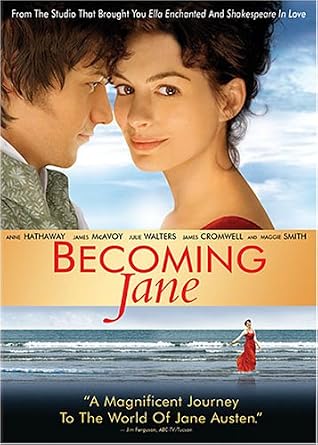
You may want to watch the film "Becoming Jane" to get an idea of the period Jane Austen lived.
Don't take all that is said too seriously.
You can read this article about Thomas Lefroy, ....Austen's first love?


Wednesday, 3 April 2019

Kahoot

Kahoot! is a game-based learning platform, used as educational technology in classrooms and other learning institutions. 
The company was launched in August 2013 in Norway. Its learning games, "kahoots", are multiple-choice quizzes that allow user generation and can be accessed via web browser.


The Enlightenment

Fly Through 17th Century London


(2013) Prize-Winning Animation Lets You Fly Through 17th Century London. [Online] Retrieved from  http://www.openculture.com/2013/11/fly-through-17th-century-london.html (Accessed March 31st)